May 2015: Marie Herbenstein, deception and disguise of orchid mantis and owl butterflies with @jamohanlon @JohannaMappes and @SebaDeBona

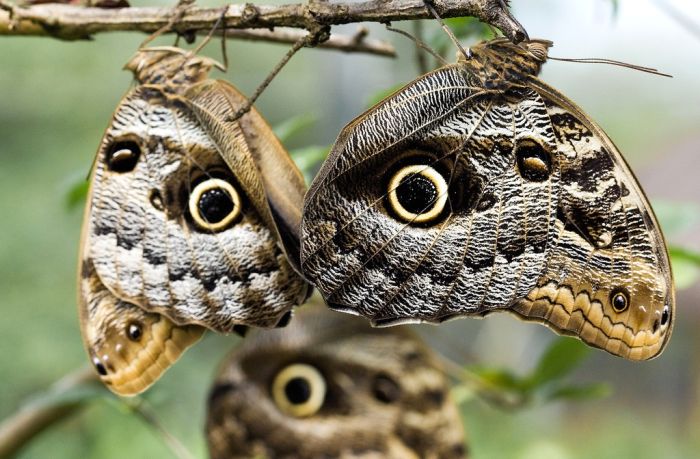
This month I’m joined by special guest James O’Hanlon from the Australian museum in Sydney for a deception and disguise special. James tells me about his PhD research on mantids that trick bees by mimicking flowers - or do they?! And we discuss a new paper showing that butterfly eyepsots might really be mimicking the eyes of a predator’s own predator. In the Scientific spark I talk to Marie Herbenstein, from Macquarie University in Sydney, who tells me that things might have not gone the way they have if she’d chosen a different research project!

Download the MP3

The owl butterfly Photo Credit: 1funny.com

Quicklinks:

James O'Hanlon's webpage

Predator mimicry, not conspicuousness, explains the efficacy of butterfly eyespots

Marie Herbenstein's webpage
Thursday, 4 June 2015
Posted by Hannah

April 2015: Tristram Wyatt, the hormonal bond between humans and their dogs, and predator-prey flight and fight behaviour

This month I discover what black field crickets do when predatory lizards get too close. I find out how humans bond with their canine chums. In the Scientific spark I talk to Tristram Wyatt, from the University of Oxford, who tells me how he became fascinated in all things pheromone-y.

Download the MP3

Borrow my doggy-friend - Milo

Quicklinks:

Patricio Lago's webpage

Oxytocin-gaze positive loop and the coevolution of human-dog bonds

Tristram Wyatt's webpage
Monday, 1 June 2015
Posted by Hannah

March 2015: Shaun Killen, animal personality, and guppy food preferences

This month, I discover that a preference for a particular colour of food can be heritable, and I also have a chat with Niels Dingemanse from the Max Planck Institute for Ornithology about how you test animal personality. In the Scientific spark, I talk to Shaun Killen, from the University of Glasgow, who tells me about his inspiration to become a scientist.

Download the MP3


Testing Great tit personality. Image from http://www.mpg.de/617557/pressRelease20100209

Quicklinks:

Great tits: birds with character

Artificial selection for food colour preferences

Shaun Killen's webpage

Naturally speaking podcast
Thursday, 2 April 2015
Posted by Hannah

Feb 2015: Damien Farine, penguins who can't taste, and shiny tree swallows

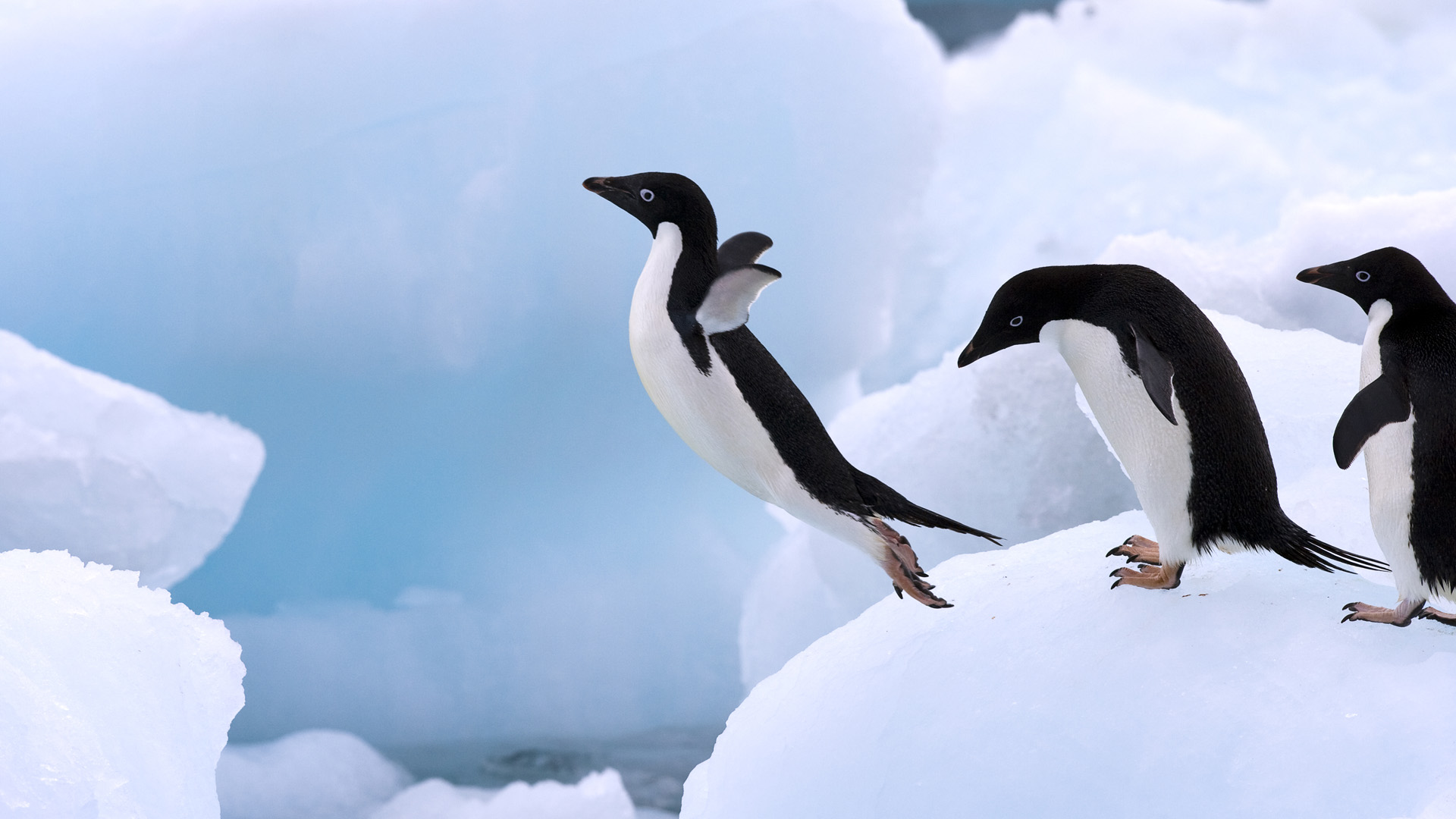
This month, I find out that penguins can’t tell the difference between savoury and sweet. I also chat with Sonia Van Wijk from The Université de Sherbrooke in Quebec, Canada, about what makes a male tree swallow attractive to a female who's on the look-out for more than one partner. And in the Scientific spark, I talk to social network whizz Damien Farine, from the University of Oxford, about his path into science.

Download the MP3


Adelie penguins from http://animalsadda.com/adelie-penguin/

Quicklinks:

Sonia Van Wijk's Research Gate page

The penguin taste loss paper in Current Biology

Damien Farine's webpage
Tuesday, 31 March 2015
Posted by Hannah

Jan 2015: Niels Dingemanse, animal arithmetic, and smooth billed ani alarm calls

This month, animal arithmetic from a research group in Italy who investigated how chickens order numbers – I put Naked Scientist Graihagh Jackson through her paces. Also in the episode, Leanne Grieves from McMaster University tells me what Smooth-billed anis do in response to different types of predators. And Niels Dingemanse, from the Max Planck Institute for Ornithology tells me about his Scientific Spark.

Download the MP3


Credit: Rosa Rugani, University of Padova

Quicklinks:
Leanne Grieves' paper on Ani in Animal Behaviour
Number-space mapping in the newborn chick resembles humans’ mental number line, in Science
Niels Dingemanse's research page
Tuesday, 10 March 2015
Posted by Hannah

Dec 2014: Innes Cuthill, tropical lizard leaf mimicry, and bird infrasound

Professor Innes Cuthill from the University of Bristol describes his Scientific Spark. Danielle Klomp from the University of New South Wales, tells me about two populations of gliding lizard that have diverged in gliding membrane colouration to match the colours of their local falling leaves, and that mimicking falling leaves is an adaptation that functions to reduce predation by birds. I also find out how birds heard tornadoes coming and fled one day ahead.

Download the MP3


Falling leaf mimic - Bornean gliding lizard, Draco cornutus

Quicklinks:

Danielle Klomp's paper in Biology Letters

Danielle Klomp's blog

Tornadic Storm Avoidance Behavior in Breeding Songbirds - Current Biology

Innes Cuthill's Camo Lab
Friday, 2 January 2015
Posted by Hannah

Nov 2014: The Wiltschkos and magnetic navigation in birds

A sensory ecology bonanza! Professor Wolfgang and Roswita Wiltschko, the husband and wife team who were the first to show that birds have a magnetic sense and use the earth’s magnetic field to orientate, talk about their Scientific Spark. Tanya Kleinhappel tells me how fish sniff out friends from foe. I discover how bats jam their competitor’s sonar.

Download the MP3
Bats jam each others echolocation calls when competing for prey

Quicklinks:

Tanja Kleinhappel's paper on Diet-mediated social networks in shoaling fish

Corcoran's and Conner's Science paper - Bats jamming bats: Food competition through sonar interference

Wolfgang and Roswitha Wiltschko's research page
Monday, 22 December 2014
Posted by Hannah

Oct 2014: Ben Sheldon, rock goby camouflage, and lizard imitation

Professor Ben Sheldon, who is the Luc Hoffman Chair of field ornithology and director of the Edward Grey Institute of field ornithology at the University of Oxford tells me what sparked his interest in birds and gives advice to young scientists. Alice Lown tells me about an unassuming little fish commonly found in rock pools around Britain, that is a master of camouflage. I discover that imitation isn’t just the highest form of flattery, but is also an indicator of an animal’s learning prowess.

Download the MP3


Three individuals are shown on the left having been placed on a black background, and then the same individuals are shown on the right after being on a white background.

Quicklinks:
Alice Lown's research page
Alice Lown's paper
Anna Wilkinson's paper
Ben Sheldon's research page
Tuesday, 18 November 2014
Posted by Hannah

Sept 2014: Leigh Simmons, stickleback personality, and caterpillars with hats

Dieter Hochuli from the University of Sydney, tells me what life’s like for a caterpillar, and how one has evolved a cool mechanism to avoid being attacked. I find out how personality might influence your decision making, if you’re a stickleback. And in the scientific spark, I talk to Leigh Simmons who is managing editor of the scientific journal Behavioral Ecology, and Professor at, and Director of, the Centre for Evolutionary Biology at the University of Western Australia, about his inspiration to become a scientist.

Download the MP3

The gum leaf skeletoniser caterpillar is very fashion-forward with its approach to headgear. Photo: Nuytsia@tas

Quicklinks:
Dieter Hochuli's Research Gate page
Diamanto Mamuneas' paper
Diamanto Mamuneas' research page
Leigh Simmons' research page

Friday, 10 October 2014
Posted by Hannah

Aug 2014: Marlene Zuk, hummingbird taste perception, and magpie thieves

In this 1st birthday episode, I find out about some more avian criminals of the animal kingdom. I learn that most birds can’t taste sugar, but hummingbirds can, and I learn how. And in the Scientific Spark, I talk to Marlene Zuk, Professor of behavioural and evolutionary biology at the University of Minnesota. Together with Bill Hamilton, Marlene proposed the good genes hypothesis of sexual selection
Download the MP3


Quicklinks:
Maude Baldwin's Science paper on Hummingbird sweet taste page
Prof. Marlene Zuk's webpage
Dr Toni Shephard's paper on magpies
Crab Exeter on twitter
Wednesday, 10 September 2014
Posted by Hannah

July 2014: Isabella Rossellini and mammas, spider mimicry, and secret communication in horses

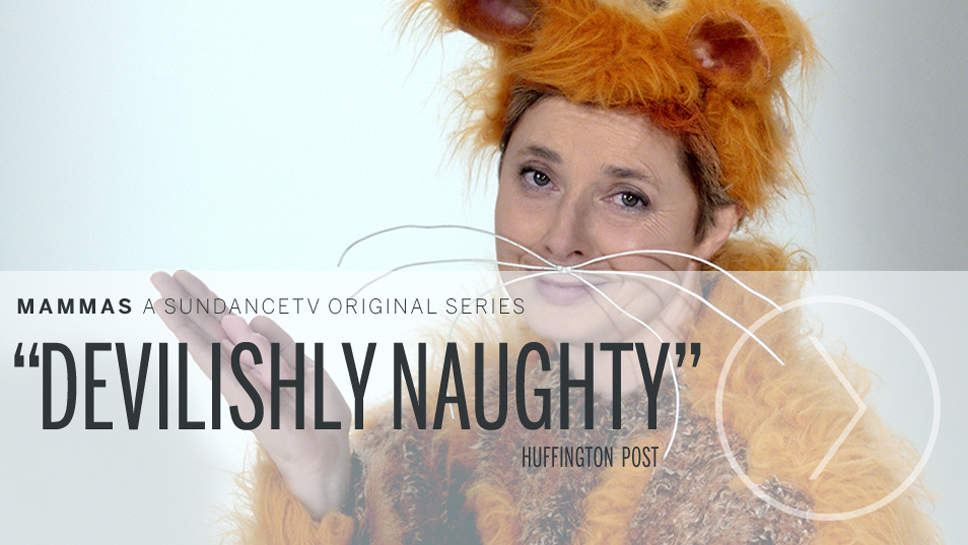
This month over 1000 scientists flocked to New York’s Hunter College to attend the meeting of the International Society for Behavioural Ecology or ISBE. In the coming months I will be featuring interviews from researchers who attended the meeting, and this month, my first interviewee is Tom White from Macquarie university in Australia, who told me about spider he studies that is very good at attracting bees and flies. I also find out about a secret communication channel in horses, and in the Scientific Spark, I met actress and model and new student of animal behaviour, Isabella Rossellini, and asked her how she made the leap from the big screen to studying the science of behaviour.
Download the MP3


Quicklinks:
Tom White's twitter page
Tom White's webpage
Current Biology paper on horse communication webpage
Isabella Rossellini's mammas
Friday, 8 August 2014
Posted by Hannah

June 2014: Robert Hinde, and an antipredator defence special

Professor Robert Hinde, the Emeritus Royal Society Research Professor of Zoology at the University of Cambridge is this month's Scientific Spark. Robert talks about the early days of ornithology research just after the war, and his memories of David Lack and Niko Tinbergen.
The rest of the episode is an anti-predator defence special! I talk to Jolyon Troscianko from project nightjar about his research on the camouflage of eggs and chicks of African birds. I also find out about an animal that dupes it’s predators by looking like an evolutionary ghost.

Download the MP3


A Mozambique from one of @projectnightjar nests in Zambia.

Quicklinks:
Project nightjar's twitter page
Project nightjar's webpage
Christopher Akcali and David Pfennig's paper on snake mimicry
Professor Robert Hinde
Tuesday, 8 July 2014
Posted by Hannah

The Beepcast on iTunes

Subscribe via email

Enter your email address:

Delivered by FeedBurner

Powered by Blogger.

Followers

- Copyright © The Behavioural Ecology and Evolution Podcast -Metrominimalist- Powered by Blogger - Designed by Johanes Djogan -