April 2014: David Sherry and marsh tits, zebra stripes, and Arabian babblers
David Sherry from the Western University in Canada tells me what inspired him to study the hoarding behavior of birds, in the Scientific Spark. Oded Keynan explains the benefits to having offspring stick around for an extended period of time. I also find out why zebras have stripes, and why Rudyard Kipling was wrong!
Download the MP3

Quicklinks:
Oded Keynan's webpage
Tim Caro's webpage
Tim's zebra paper in Nature communications
David Sherry's webpage
Download the MP3
Zebras and their stripes
from https://www.flickr.com/photos/mobilevirgin/
Oded Keynan's webpage
Tim Caro's webpage
Tim's zebra paper in Nature communications
David Sherry's webpage
March 2014: Temple Grandin, autism, weaver birds, and tadpole social learning
The social lives of animals is this month's theme. I talk to Damien Farine from the Edward Grey Institute at Oxford University, who tells me how weaver birds decide how many house mates they want to live with. I discover how being hungry can affect how information spreads through a group of tadpoles. And in the scientific spark Temple Grandin, Professor of Animal Science at Colorado State University, a best-selling author, an autistism activist, a consultant to the livestock industry on animal behavior, and designer of the "hug box", a device to calm those with autism, tells me what inspired her to be a scientist.
Download the MP3

Quicklinks:
Damien Farine's webpage
Damien's paper on weavers
Tadpole social learning, in Animal behaviour
Temple Grandin's webpage
Download the MP3

Quicklinks:
Damien Farine's webpage
Damien's paper on weavers
Tadpole social learning, in Animal behaviour
Temple Grandin's webpage
Feb 2014: Kirsty MacLeod and meerkats, birds and airplanes, and New Zealand conservation with James Russell
Meerkats may look cute and cuddly, but this month, Kirsty MacLeod from Cambridge University tells me that for some, life isn’t as picture perfect as it seems. I find out about the US Department of Agriculture’s latest research on the quest for safer skies. And, in the Scientific Spark I ask James Russell, a conservation biologist from the University of Aukland in New Zealand, what inspired him to research invasive species biology, and what the hardest tasks are in trying to save New Zealand’s endangered species.
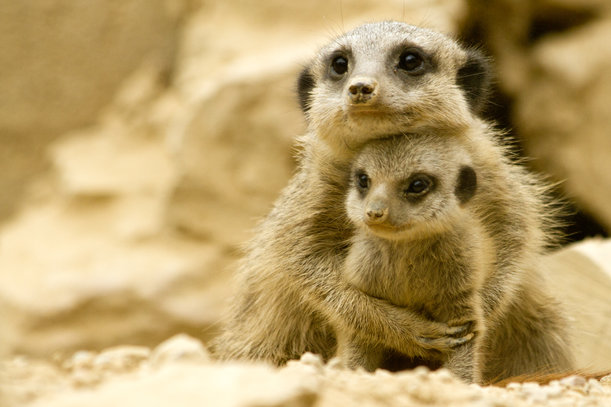
Photo by Flickr user Jon Pinder
Quicklinks:
Kirsty MacLeod's webpage
Turkey Vulture paper in Plos One
Travis DeVault's webpage
James Russell's webpage
Jan 2014: Lesley Morrell, prairie dogs, and stinky parrots
This month, I speak to Milla Mihailova from Deakin University in Australia, who tells me about parrots with a particularly pungent stench. I get up close and personal with some black tailed prairie dogs, to find out why they can’t help following the leader. And, in the Scientific Spark I ask Lesley Morrell (@biosciencemum), from the University of Hull what made her want to be a biologist, and how she came to work on why animals live in groups, rather than enjoying the single life.
Download the MP3

Quicklinks:
Milla Mihailova's webpage
Prairie dog paper
Jim Hare's personal webpage
Lesley Morrell's University webpage
Download the MP3

A black-tailed prairie dog jump-yipping. Credit: Darlene Stack
Quicklinks:
Milla Mihailova's webpage
Prairie dog paper
Jim Hare's personal webpage
Lesley Morrell's University webpage
Dec 2013: Steve Jones, slime mold, and spiders that mimic ants
This
month, we leave backbones behind, for an invertebrate and protist special. I speak
to Chris Reid from the the New Jersey Institute of Technology in Newark, USA, about an ancient
single cell animal that looks like a glob of luminous yellow gunge, that doesn't
have a brain but may be smarter than human beings. I find out about a double
deception in the animal kingdom: how an ant-mimicking spider sends misleading
visual and chemical cues to different predators. And, in the scientific spark I
ask Steve Jones, Emeritus Professor
of genetics at University College London what made him want to be a scientist, and how he came to be
one of the world’s experts on snail genetics
Download the MP3
An ant-mimicking spider Peckhamia image courtesy of Continis
Quicklinks:
Chris Reid's webpage
Divya Uma's paper on ant-mimicry
Steve Jones' column in the Telegraph
Nov 2013: Nicky Clayton and clever crows, and mice that eat scorpions
Nicky Clayton joins me in this month's Beepcast, telling me what sparked her interest in bird intelligence, and how she mixes science with the art of dance. I learn about a mouse with an unusual superpower: immunity to the sting of a scorpion. I also interview Culum Brown of Macquarie University, Australia, who studies how young rainbow fish sniff out lurking predators.
Download the MP3

Quicklinks:
Culum Brown's webpage
Ashlee Rowe's webpage
Nicky Clayton's webpage
Download the MP3

A southern grasshopper
mouse eats the Arizona bark scorpion that it has just killed. Credit: Ashlee and Matthew Rowe
Quicklinks:
Culum Brown's webpage
Ashlee Rowe's webpage
Nicky Clayton's webpage
Oct 2013: Tim Birkhead, barn swallows, and coal tits who hide seeds
In October's BEEPcast Tim Birkhead tells me what ignited his interest in ornithology and sexual selection. I explore why male barn swallows don't act their age when courting females. In the third of my interviews from the Behavior 2013 conference, I speak to Tom Smulders of Newcastle University who explains what Coal tits do with unpalatable seeds.
Download the MP3

Barn swallows coutesy of Jim Benson http://www.flickr.com/photos/j_benson/
Quicklinks:
Tom Smulder's webpage
Masaru Hasegawa's paper
Tim Birkhead's webpage
Download the MP3

Quicklinks:
Tom Smulder's webpage
Masaru Hasegawa's paper
Tim Birkhead's webpage
Sept 2013: Amy Cuddy and power posing, honeyguides, and bower bird cognition
Amy Cuddy joins me in this month's Beepcast, telling me what ignited her interest in how people judge and influence each other. I explore the darker side of bird behaviour, looking at the sneaky tactics African honeyguides use to trick other birds into raising their young. In the second of my interviews from the
Behavior 2013 conference, I speak to Jess Isden of Exeter University who
explains what female bowerbirds look for in a male’s fancy display.
Download the MP3
Eggs used by Claire Spottiswoode. Host = little bee-eater eggs. Control = little bee-eater egg from a different nest. Honeyguide = honeyguide egg. Experimental= egg from a completely different bird, like a dove. Image: Claire Spottiswoode
Quicklinks:
Claire Spottiswoode's paper
Jes Isden's paper
Amy Cuddy's TED talk
Aug 2013: Louise Barrett, peacock eye tracking, and caterpillar eyespots
In the first episode I dig into peahen perception to find out what they look for in their ideal mate. I'll also present the first of a series of interviews from the Behaviour 2013 conference. I speak to Tom Hossie from Carleton University, Canada. Plus in the Scientific Spark I ask Louise Barrett, from the University of Lethbridge in Canada, what sparked her scientific career.

Peahen wearing eye-tracking equipment in Yorzinski et al's study.
Quicklinks:
Yorzisnki's paper
Caterpillar Eyespots: Tom Hossie's blog
More info on Louise Barrett
